Our Programs

Get to know more of our programs here

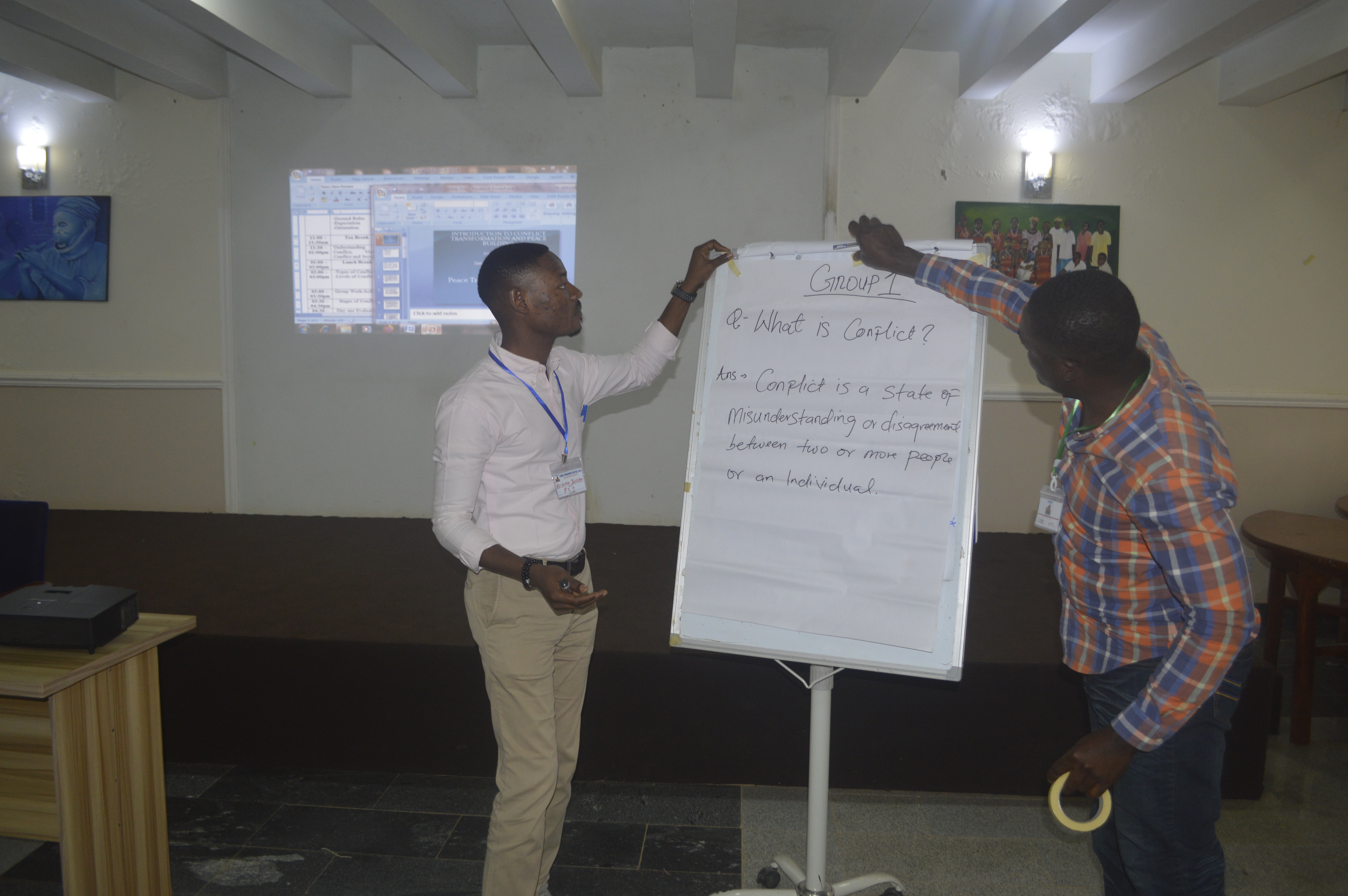
WEEK ONE: INTRODUCTION TO CONFLICT TRANSFORMATION AND PEACE BUILDING

OVERVIEW:

This course is designed to explore the issues surrounding conflict transformation and peace building with the view of understanding the basic concepts and dynamics of conflict and peace building. The module highlights the definition and nature of conflict, violence and peace, types and stages of conflict, approaches to conflict transformation and peace building and the approaches and tools in conflict analysis.

COURSE OBJECTIVES:

At the end of the week, participants should be able to:

  • Understand the basic concepts in conflict transformation and peace building.
  • Identify types of conflict and peace, stages of conflict and approaches in peace building.
  • Understand the four levels of conflict transformation and apply them in real life situation.
  • Understand tools in conflict analysis and apply them in real life situation.
WEEK TWO: INTERFAITH RELATIONS (IDENTITY CONFLICT)

OVERVIEW:

The course is planned to understand the issues and evolution of conflict and peace locally and internationally. It will explain the theoretical approaches to conflict and peace with reference to various violent conflicts experienced in Africa at the post-cold war period as they relate to identity conflict. It will cover theories of conflict and peace, violence, war, and peace, negative and positive. It will explore the causes and sources of conflicts and war. It will also explain nature and type of identity conflicts, religion and conflict, and to establish the relationships between peace and violence.

COURSE OBJECTIVES:

At the end of the week, participants should be able to:

  • To have competent and skilled peace practitioners who understand the issues of peace and conflict extensively and are practicing in real life situation.
  • To understand identity based conflict, its causes and effects.
  • To understand and strengthen the knowledge and skills of participants in conflict and peace, explore the various concepts and theories of conflict and peace with the view of understanding them from the basis of identity and resource based conflicts in the Nigerian and African context and to establish the relationship between conflict, violence, war and peace and to understand the religious dimension of conflict as a source of conflict and resource for peace building.

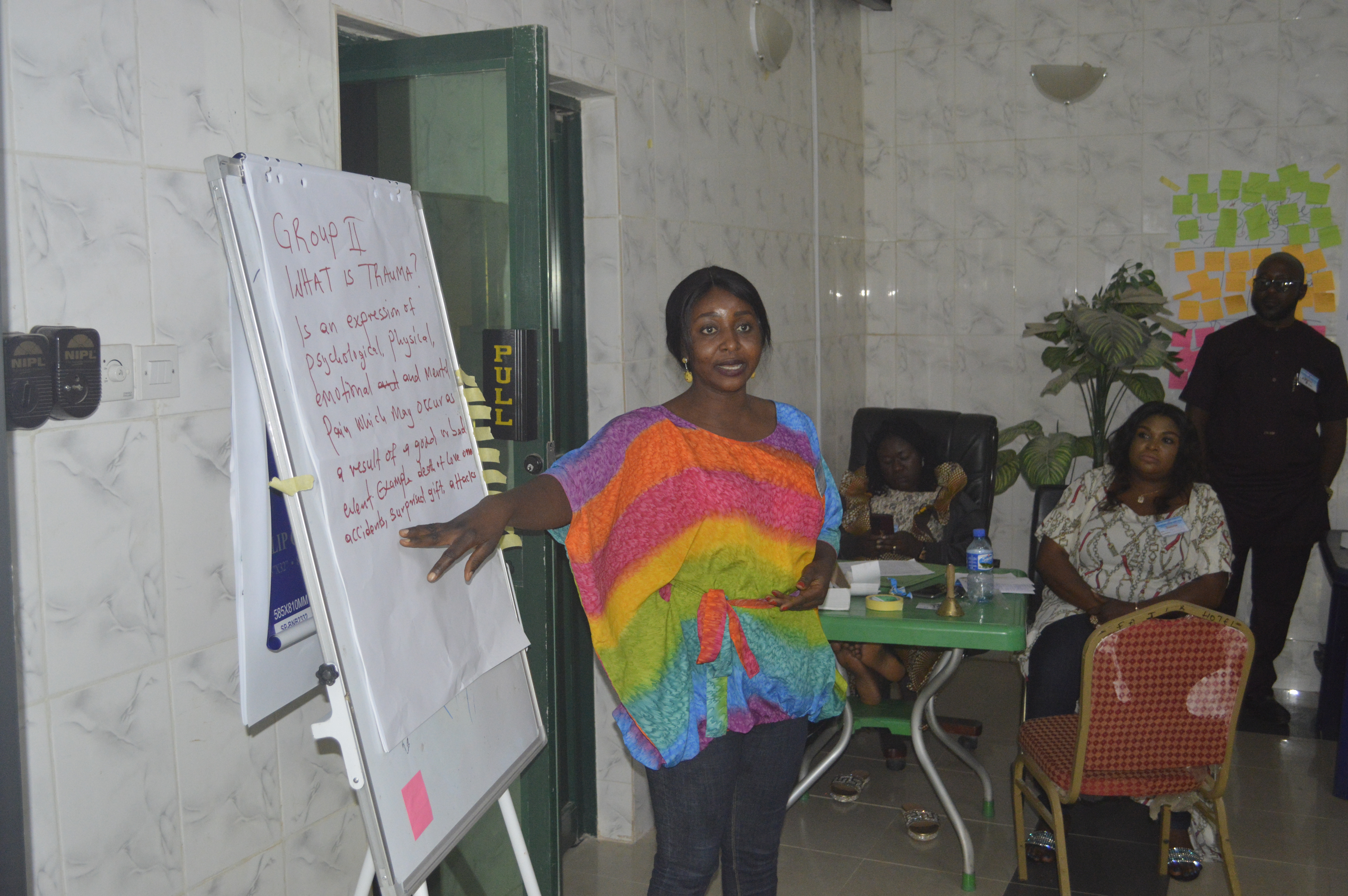
WEEK TWO: TRAUMA AWARENESS, HEALING AND RESILIENCE

OVERVIEW:

The course is designed to raise awareness on traumatic events and their effects on people. People who are traumatized can be identified helped develop healing processes, coping mechanism and resilience. Trauma Awareness, Healing and Resiliencies a very important aspect of peace building as it offers practitioners and humanitarian actors the relevant knowledge and skills for trauma healing, recovery and rehabilitation of traumatized people.

COURSE OBJECTIVES:

  • To equip Peace practitioners and humanitarian actors with practical knowledge and skills in trauma healing.
  • To identify and understand the basic concepts and theories of trauma healing.
  • To understand the different approaches and methodologies of assessing traumatized people.
  • To conduct practical trauma healing sessions during the training.

WEEK THREE: INTRODUCTION TO EMERGENCY PREPAREDNESS AND RESPONSE

OVERVIEW:

This course is designed to introduce participants to issues of emergencies and responses on man-made and natural disasters. The course hinges on basic concepts of emergency preparedness and response through early warning and early response mechanism.

COURSE OBJECTIVES:

  • To introduce participants to basic concepts in emergency preparedness and response.
  • To enable participants, acquire knowledge and skills in vulnerability and hazard analysis.
  • To acquire knowledge and skills in community early warning and early response.

MODULE WEEK: REFLECTIVE PEACE PRACTICE/COMMUNITY CONFLICT SYSTEM ANALYSIS

OVERVIEW:

This module will help participants to understand RPP as a tool used by relevant stakeholders in assessing and analysing conflict situations with the view of understanding the causes, effects and their interconnected relationships, driving factors for conflict and for peace towards a collaborative approach of responses. It is a process of engaging the stakeholders in a collaborative analysis of the situation.

COURSE OBJECTIVES:

To help participants acquire skills in conflict analysis in order to understand the different between conflict situation and conflict context analysis. It helps participants to acquire knowledge and skills in the promotion of peace at all levels of the society.

WEEK THREE: CLIMATE CHANGE, CONFLICT, PEACE AND DEVELOPMENT

OVERVIEW:

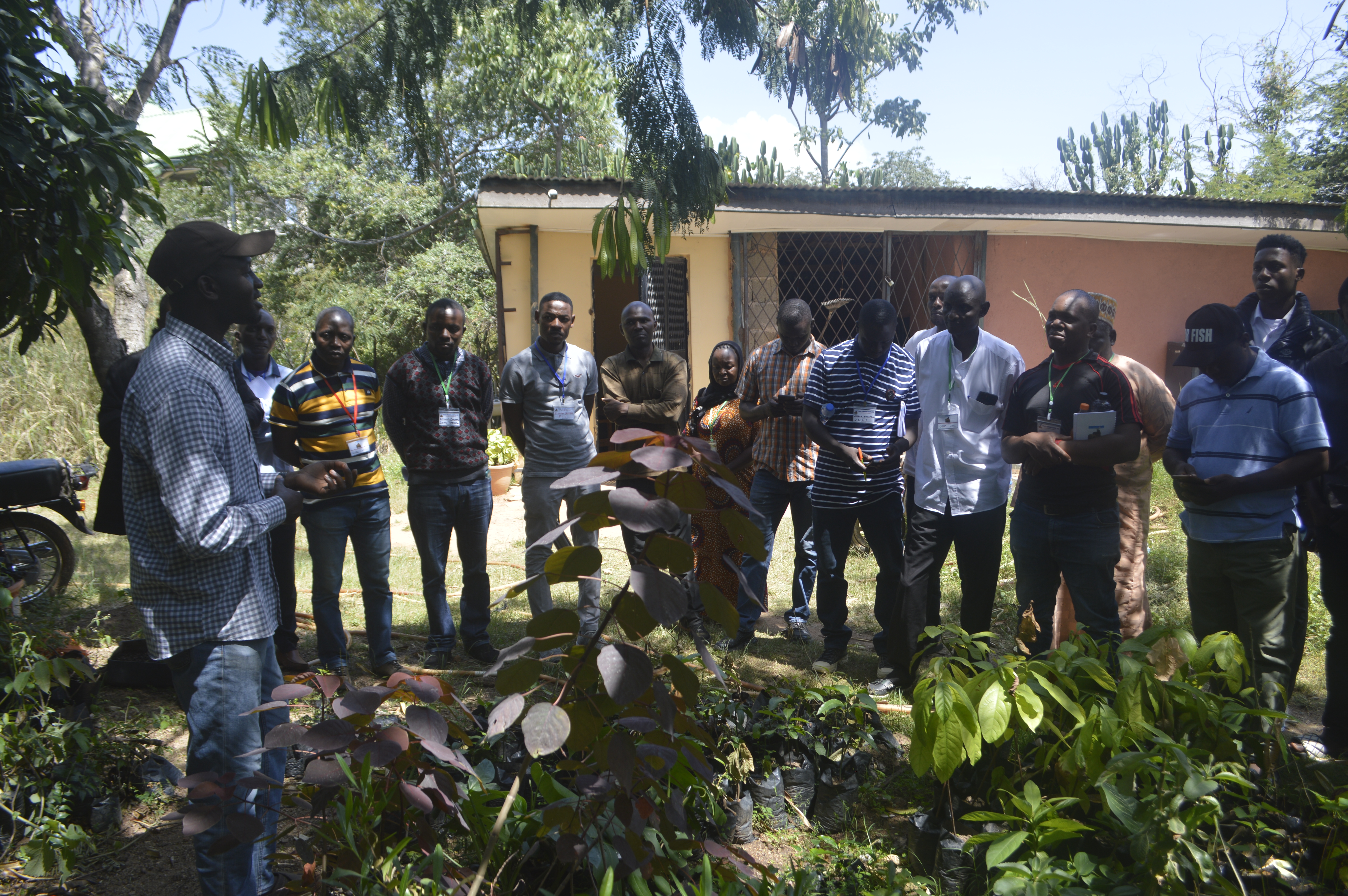
The course will discuss the nexus between climate change adaptation, conflict, peace and development and their impact on human beings, sources of livelihood and community resilience It will elaborate on the theories of climate change, conflict, peace and development based on the Nigerian context with particular interest on Northern Nigeria, looking at the causes of climate change impact with reference to increasing environmental degradation, loss of arable land for agriculture, desert encroachment, human practices and industrial pollution. It will look at how local authorities can adapt to climate change and increase their climate resilience by discussing climate change projections and scenarios and further explore the policy implications of climate change projections in a case study. Also, to identify tools to measure climate change vulnerabilities and practice by assessing their own local context. The course will also look at peace building and development with key reference to sustainable development policies and to address change management as they relate to climate change obstacles during the implementation of climate policies. In interactive sessions, participants will share best practices from different parts of the Country and communities. A visit to some inspiring places affected by climate change or environmental degradation with emphasis on managing flood and sustainable agriculture using organic and tree planting. Course Participants will be engaged in sharing best practices within their context and to develop action plans to be implemented or step down in their respective communities.

COURSE OBJECTIVES:

  • Understand the concepts of climate change adaptation, mitigation and resilience, and relationship between conflict, peace and development.
  • Understand key foundational concepts and practices required for effective climate change adaptation, policy development and implementation, and comprehend the political, socioeconomic, regional and international risks, costs and benefits these may entail.
  • Increase insight into climate change scenarios and policy implications
  • Conduct disaster risk and climate change vulnerability assessment including data collection and monitoring/surveillance mechanisms for assessing the status of environmental changes
  • Design and develop climate change action plan with strategic local community-based climate change policies and mitigation measures.

WEEK FOUR: GENDER, CONFLICT AND DEVELOPMENT

OVERVIEW:

The course deals with Concepts and Theories of Gender, Development and Conflict, Political Relations which analyzes gender as a signifier of power relations, political relations which analyze the relations of power and gender. Others include; Masculinities and their relationships to structural oppression, dominance, and violence directed against women and weak groups, gender specific peace proposals and vision of women as agents instead of victims. More so, it deals impact of conflict on gender categories, Local and International instruments on gender and development.

COURSE OBJECTIVES:

This course is aimed at exploring the nexus between gender, conflict and development. It provides the basis to understand the basic concepts of gender, sex and development. It will expose participants to relevant international instruments on gender and development and to acquire knowledge and skills on gender gap analysis and work place gender policies.

WEEK FOUR: PEACE EDUCATION STRATEGIES

OVERVIEW:

This course is based on the fact that since conflict and war originate from the minds of men, it is the same minds that the defenses of peace must be constructed. Everyone should be educated and enlightened about peace. Young person’s should be made vanguards of peace. Peace education is set out to redress this culture of violence and aggression and to inculcate the values of non-violent change among young persons and adults. The course educates participants to suppress their instinctive nature of being violent, understanding the dynamics of conflict and the promotion of peace making skills in homes, schools and communities throughout the world. It highlights on the concepts of human dignity and human rights based on values such as economic equity, political participation and ecological balance. Also, global ethics, gender issues, global governance, skills of conflict analysis and management, identification of conflicts and sources of conflict.

COURSE OBJECTIVES:

  • The course is designed to help participants develop a culture of peace and to acquire skills in conflict management and peace education.
  • To help Peace Club curriculum module, methods and approaches of peace education.